
Colossal Accelerates the Full Dodo De-extinction Pipeline
DALLAS, Oct. 14, 2026
Press Release Disclaimer: This is a press release distributed through the XPR Media network. It has not been independently verified by our newsroom.
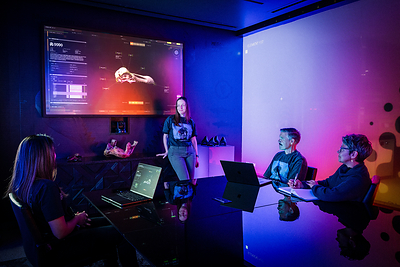

Colossal Accelerates the Full Dodo De-extinction Pipeline
PR Newswire
DALLAS, Oct. 14, 2026
New AI platform GenoMorph identifies candidate regulatory DNA linked to the dodo’s distinctive craniofacial anatomy, while technologies adapted from earlier species programs advance Nicobar pigeon germ-cell development, chicken stem-cell chimeras and embryo gene editing.
DALLAS, Oct. 14, 2026 /PRNewswire/ — Colossal Biosciences, the world’s first de-extinction company, today announced new scientific milestones that will accelerate dodo de-extinction efforts. Building on last year’s advances in pigeon primordial germ cells, gene-edited chicken surrogates and comparative avian genomes, today Colossal unveiled GenoMorph, its AI platform developed to identify potential gene-editing targets from limited genomic data. Applied to the dodo program, the platform identified an estimated 2,300 candidate regulatory elements associated with avian beak size and shape. Colossal also announced advances across its avian de-extinction pipeline, including substantially improving the dodo genome assembly through the use of technology from its dire wolf project, an expanded Nicobar pigeon colony, newly derived Nicobar primordial germ cells, chicken embryonic-stem-cell chimeras and a breakthrough lipid-nanoparticle system for gene editing delivery in avian embryos. Together, these capabilities provide the genomic, cellular and reproductive foundation required to translate predicted dodo traits into experimentally validated edits.
Colossal Develops GenoMorph, a New Internal AI Platform
Colossal has developed GenoMorph, an AI-powered platform that identifies potential gene-editing targets for de-extinction projects with limited genomic data. The platform combines comparative genomics, developmental biology and high-resolution 3D morphology to predict which regulatory elements may be active during development and identifies those most strongly associated with differences in physical form.
Unlike protein-coding genes, which provide instructions for building an animal, regulatory DNA controls when, where and how strongly those instructions are activated. These genetic “switches” help shape traits such as the size and structure of a bird’s skull and beak.
“De-extinction is as much a data problem as a biology problem,” said Ben Lamm, CEO and Co-Founder of Colossal. “Because so few dodo genomes survive, we cannot rely on the population-level comparisons available for many living species. Our GenoMorph platform provides another path: it learns how regulatory DNA shapes living birds, then identifies the genetic switches that may have contributed to the dodo’s distinctive anatomy. This is more than a solution for the dodo. It provides a repeatable approach for extinct species whose genomic records are similarly limited.”
To build GenoMorph, Colossal’s avian team created an avian regulatory atlas using hundreds of samples from chickens, quail, ducks and pigeons. The samples covered six stages of embryonic development and three regions of the developing face. The team then combined these data with genomes and CT-derived skull measurements from more than 70 bird species, including the Nicobar pigeon, the dodo’s closest living relative, mapped using 541 anatomical landmarks.
The analysis identified 653 candidate regulatory elements associated with beak size and 1,698 associated with beak thickness and breadth. These findings do not yet establish that the elements cause those traits; instead, they provide prioritized targets for experimental testing. Elements confirmed to influence craniofacial development may then be considered for precision genome editing in the Nicobar pigeon, providing a data-driven path toward reconstructing key aspects of the dodo’s distinctive anatomy.
“The dodo’s defining anatomy emerged from networks of regulatory instructions that are difficult to interpret from ancient DNA alone,” said Beth Shapiro, PhD, Colossal’s Chief Science Officer. “The answer turned out to be comparative: use the breadth of living bird diversity, combined with AI, to identify candidate loci for the next phase of testing. By learning how skulls and beaks develop across living birds, GenoMorph allows us to prioritize the regulatory changes most likely to have shaped the dodo and move them into functional validation. It establishes a repeatable framework for connecting ancient genomes to extinct traits.”
“You cannot train AI to answer a precise developmental question using just generic data,” said Anna Keyte, Avian Species Director at Colossal. “We needed to capture how regulatory activity changes across species, developmental stages and different regions of the face. Building that dataset required more than a year of focused experimental work, and it is what allows GenoMorph to generate biologically meaningful predictions.”
Candidate elements are now entering functional-validation studies. Those confirmed to influence craniofacial development may be prioritized for precision editing in the Nicobar pigeon genome. Preliminary findings have been presented at the Craniofacial Gordon Research Conference and the Society for Molecular Biology and Evolution annual conference and the 2026 Society for Molecular Biology and Evolution annual meeting.
While this work advances the dodo de-extinction program, its scientific implications extend well beyond a single species. The ability to predict developmentally active regulatory DNA from genome sequence alone, and to validate that against quantitative morphological data across a broad comparative sample, provides a scalable framework for studying the genetic basis of complex anatomical traits in any bird lineage. This includes endangered species for which large population genomic datasets are unlikely ever to exist, where identifying functionally relevant regulatory variants has previously been intractable.
Dire Wolf Technology Is Helping Build a More Complete Dodo Genome
The dodo genome assembly that Colossal’s team is using is of extremely high quality for ancient DNA, thanks to the excellent preservation of the dodo specimen from which the genomic data was extracted. However, the fragmented nature of ancient DNA means that, despite this excellent preservation, gaps in the genome sequence remain that can impact analysis. Through the dire wolf program, the company developed a computational genome-assembly method that, applied to improve the dodo genome assembly, demonstrates how technologies created for one de-extinction project can be refined and applied across Colossal’s broader species portfolio.
Ancient DNA is fragmented into short strands of surviving DNA, damaged due to degradation, and the genome sequence is often substantially different from that of its closest living relative. Conventional assembly methods map ancient DNA fragments against a living reference genome—in this case, the Nicobar pigeon—and may discard fragments that are too divergent to align. This can leave gaps in the assembly and bias the reconstructed genome toward the living species.
Colossal’s published iterative assembly method addresses this limitation by using newly mapped dodo DNA to progressively update the reference genome. The updated reference is then used to map the ancient DNA again, allowing previously unmatched fragments to “walk” into gaps with each successive round. After repeating this process until the number of newly recovered dodo sequences reached a plateau, the result is a substantially more complete assembly than would have been possible through a conventional single-pass approach. Our dodo genome has, for example, 95% of bases covered at least 5-fold (meaning that at least five unique ancient DNA molecules map to more than 95% of letters in the genome), and an average coverage of 65-fold.
“We are in the final stages of our analysis of the dodo genome, with much more to come after the genome paper goes through peer review. In the meantime, it’s been rewarding to see that an approach developed for the dire wolf is now producing value across another species program. That repeatability is central to Colossal’s model: every scientific breakthrough becomes part of a scalable technology platform that can accelerate the programs that follow,” said Beth Shapiro.
Colossal Expands Its Nicobar Pigeon Colony and Avian Research Platform
Colossal has expanded its Texas colony of Nicobar pigeons—the dodo’s closest living relative—to 36 birds following successful breeding among established pairs. The growing colony provides an increasingly robust foundation for studying Nicobar pigeon development, reproduction, and genetics while supporting the company’s dodo de-extinction program.
Eggs collected during the latest breeding season were used to derive Nicobar pigeon primordial germ cells, or PGCs. These are the cells that eventually develop into sperm and eggs. Establishing these cells is essential to our path of creating heritable genome edits and producing future generations of birds carrying selected dodo traits.
Colossal is also working to develop a telomere-to-telomere Nicobar pigeon genome, improving on the existing chromosome-level assembly. This will provide a stronger foundation for identifying potential edits and for improving the genome of the Rodrigues solitaire, an extinct relative of the dodo. Colossal plans to add newly available solitaire sequence data and remap it against the improved Nicobar reference to increase its coverage and completeness.
Chicken embryonic-stem-cell chimeras
Colossal scientists have also developed a new platform using avian embryonic stem cells to generate chimeric chickens, and have successfully hatched the first chimeras produced through the platform. Embryonic stem cells offer a route to introduce engineered cells into a developing embryo and observe how those cells contribute to the phenotype of the bird. Hatching viable chimeric chickens confirms that the cultured cells retain the developmental potential needed to integrate into a host embryo and contribute to its various tissues.
Colossal is also expanding their embryonic stem cell culture system to pigeons to support the dodo de-extinction program. By editing embryonic stem cells and using these edited cells to create chimeric pigeons, scientists can test whether the edits have the predicted effect on phenotype before editing PGCs. This establishes a platform for phenotype screening, allowing the team to test candidate edits and evaluate their effects before combining them on the path to a dodo.
Colossal Develops Lipid-Nanoparticle Gene-Editing Platform for Avian Embryos
In another world’s first, Colossal has also developed a lipid-nanoparticle delivery platform that efficiently introduces DNA, RNA, and CRISPR gene-editing tools into developing bird embryos while improving embryo viability over traditional delivery methods. In experiments, editing the bone-development regulator Runx2 produced a clear craniofacial phenotype, demonstrating the platform’s ability to test how specific genetic changes affect avian development. The system has also been used successfully in rock dove and duck embryos, supporting its application across bird species.
Colossal scientists are now using the lipid-nanoparticle delivery platform to validate regulatory elements identified by GenoMorph in near real time. The strongest candidates are being engineered into Nicobar pigeon primordial germ cells for further precision-editing studies. A manuscript describing the platform has been submitted to the bioRxiv preprint server.
ABOUT COLOSSAL
Colossal was founded by emerging technology and software entrepreneur Ben Lamm and world-renowned geneticist and serial biotech entrepreneur George Church, Ph.D., and is the first to apply CRISPR technology for the purposes of species de-extinction. Colossal creates innovative technologies for species restoration, critically endangered species protection, and the repopulation of critical ecosystems that support the continuation of life on Earth. To follow along, please visit: www.colossal.com.
WEBSITE & SOCIALS
Websites: www.colossal.com
Instagram: https://www.instagram.com/colossal/
YouTube: https://www.youtube.com/@colossal
Twitter: https://x.com/colossal
LinkedIn: https://www.linkedin.com/company/colossal/
Facebook: https://www.facebook.com/itiscolossal
TikTok: https://www.tiktok.com/@colossal
BlueSky: https://bsky.app/profile/itiscolossal.bsky.social

 View original content to download multimedia:https://www.prnewswire.com/news-releases/colossal-accelerates-the-full-dodo-de-extinction-pipeline-302908617.html
SOURCE Colossal Biosciences Inc.


